- فارسی
- العربية
- English

A Road Map for the Islamization for the Human Sciences
Republished : An Interview with Allameh Misbah Yazdi (Part Three)
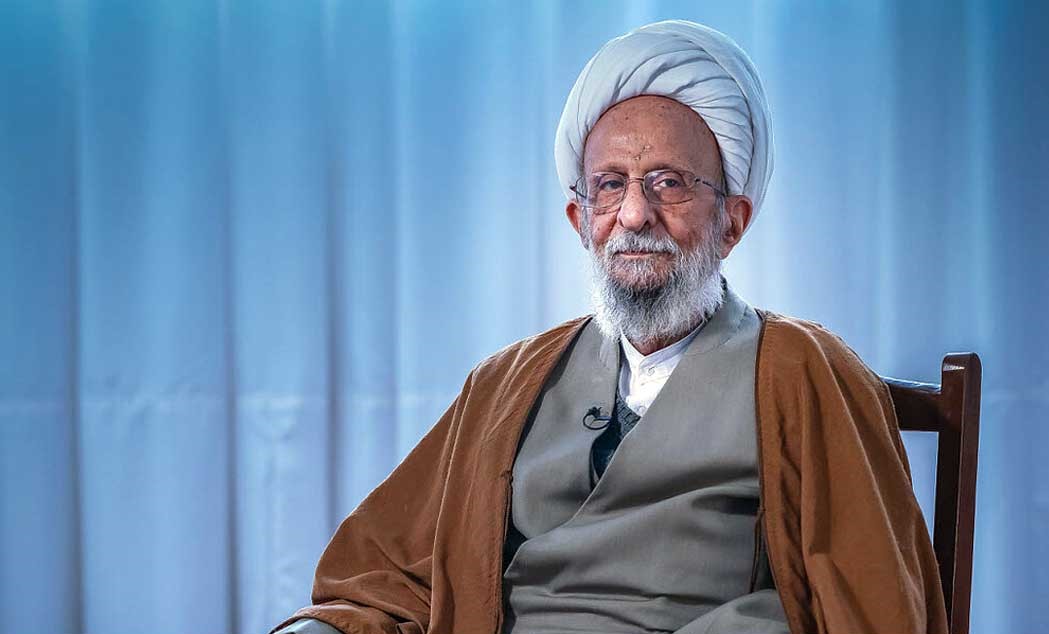
Subject of the event: Islamic Human Sciences
Location: Imam Khomeini Educational and Research Institute, Qom, Iran
Date: 1389 S.H. (2010)
Q: Are you, then, of the opinion that the bifurcation of science into human and non–human is utterly arbitrary?
To answer this question, we must reflect on the motives that brought about the classification in question. One of the more influential factors in bringing a large part of the human sciences together and in causing them to be neglected for at least a certain period of time was the progress of the empirical sciences. The advancements that humankind experienced in connection with the empirical sciences–the numerous discoveries and inventions and the consequent industrial and technological achievements–brought them into unprecedented prominence, placing them at the center of intellectual and academic attention. Those who espoused radical empiricist and positivist attitudes in time appropriated the term “science” for empirical science and argued that science applies only to beliefs that can be perceived by the senses and that furthermore can be conveyed to others. They affirmed that only propositions whose results and conclusions can be empirically exhibited to others merit the title of scientific, so that those propositions of whose content one is individually certain fail to pass muster. Hence, intuitive perception is incapable of contributing to science, and similarly introspective psychology fails to merit the designation of scientific psychology, for science is that whose conclusions can be empirically tested and presented to others. This is the prevalent understanding of science irrespective of the diverging standpoints concerning the question of positivistic verifiability and falsifiability.
It was thus that “science” came to apply exclusively to empirical science. This radical empiricist position immediately entailed a problem: mathematics was obviously not empirical but it could not be dismissed either. The proposed solution was to designate mathematics as a “basic science,” deeming it to be beyond doubt. This, however, failed to satisfactorily address the dilemma: If, in fact, mathematics is unempirical, how can it, then, be of scientific value? Philosophers of the positivistic bent strove to answer this question, but their efforts failed to produce a positive conclusion. Nevertheless, the modern designation gained prevalence, and so science was restricted to empirical science–empirical science being defined as that which is subject to sensory perception and can be conveyed to others.
But if so, how are we to deal with those fields of human knowledge that are not empirical? The answer was that these other fields ought to be designated as human or social sciences, which–contrary to empirical science–are subject to convention and individual and social attitudes. The study of law, for instance, is based solely on the governing conventions and agreements. (We must, of course, make an exception for the school of natural law, which acknowledges that human law is possessed of a rational and natural basis.)
Subsequently, “natural science” and “empirical science” were identified, and it was determined that the methodology of natural science was sensory experience. Those sciences in relation to which sensory experience was irrelevant and which eluded laboratory experimentation were classified as the human sciences. The more extreme radicals went even further, suggesting that these fields of study were not science but philosophy. Thus, the two terms philosophy and science were counterposed. Based on this extreme standpoint, the question concerning the place of philosophy among the sciences and its peculiar scientific category is fundamentally erred. Philosophy is not science, and therefore it is meaningless to ask whether it belongs to the category of human sciences: philosophy is philosophy. According to this designation, only natural sciences–whose defining feature is their reliance on sensory experience–are genuinely science; that is, sensory experience that allows of being presented to others. As is evident, this discussion rests on the peculiar choice of terminology that one opts for.
Interviewers:
Dr. Mohammad Fanaei, PhD in Philosophy of Religion, Full professor of Imam Khomeini Educational and Research Institute
Dr. Ali Mesbah, Doctor of Philosophy of Religion, Associate Professor of Imam Khomeini Educational and Research Institute
Dr. Mahmoud Namazi Esfahani, PhD in Philosophy of Religion, Assistant Professor of Imam Khomeini Educational and Research Institute
بازنشر
- بازدید: 199